Learn Automation Secrets in ZOHO CRM
How much time does your sales team spend updating deal statuses, sending follow-up emails, and checking whether a lead is stuck somewhere in the pipeline?
— "Honestly, that's too much."
CRM automation solves exactly this problem. And Zoho CRM one of the most powerful tools for achieving this—without hiring a single developer.

What Is CRM Automation and Why Does Your Sales Team Need It
Pipeline automation means the system automatically moves deals through the stages, sends reminders, assigns tasks, and notifies managers at exactly the right time.
Without automation, your pipeline looks like this:
- Managers update deal statuses manually after every call;
- Follow-up emails are sent "when someone remembers";
- leads remain at the same stage for weeks without anyone noticing;
- The manager only finds out about the problem at the Friday meeting.
With automation, the system handles all of this in real time.
How It Works in Zoho CRM
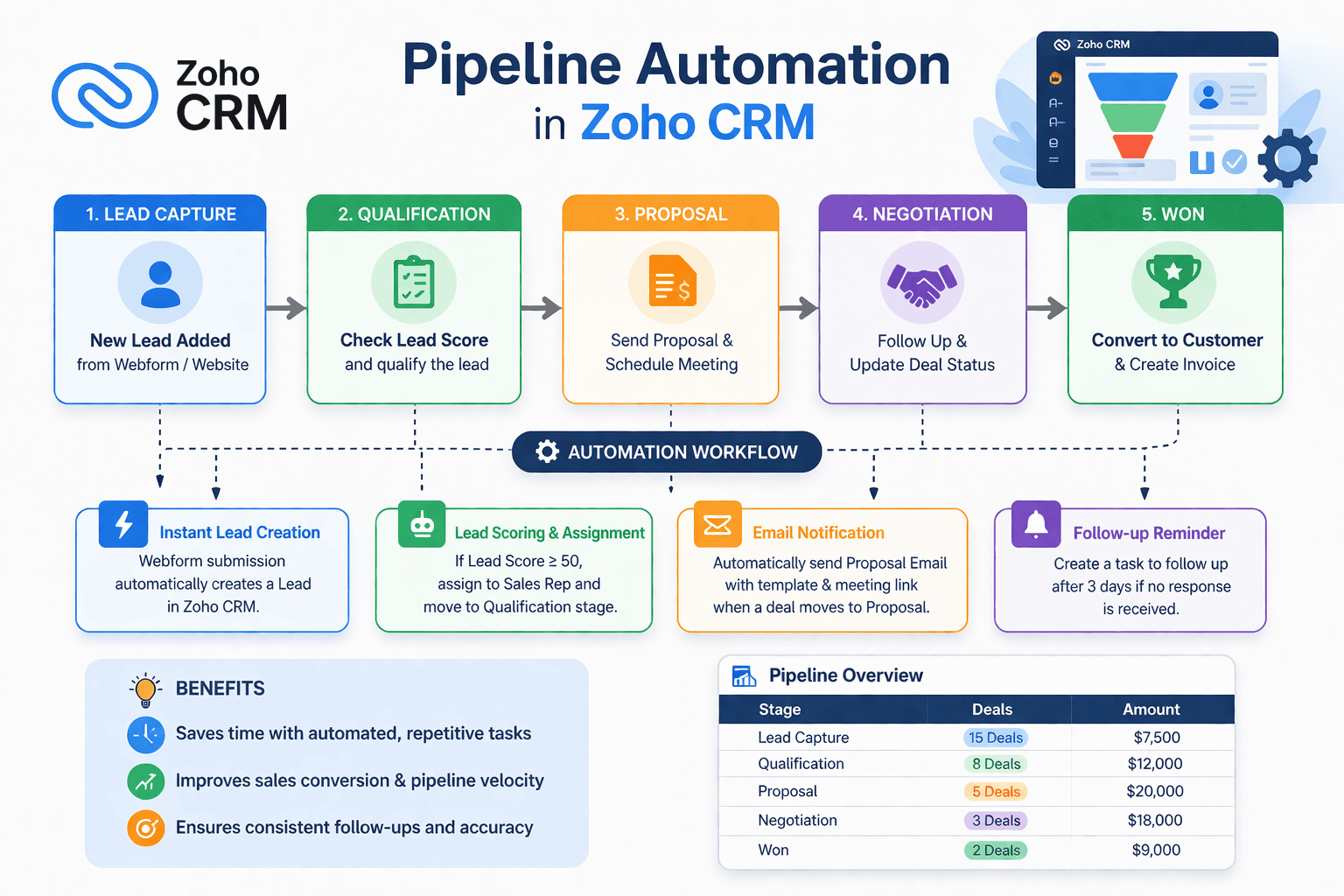
Zoho CRM lets you set up pipeline automation using several built-in tools— no coding required :
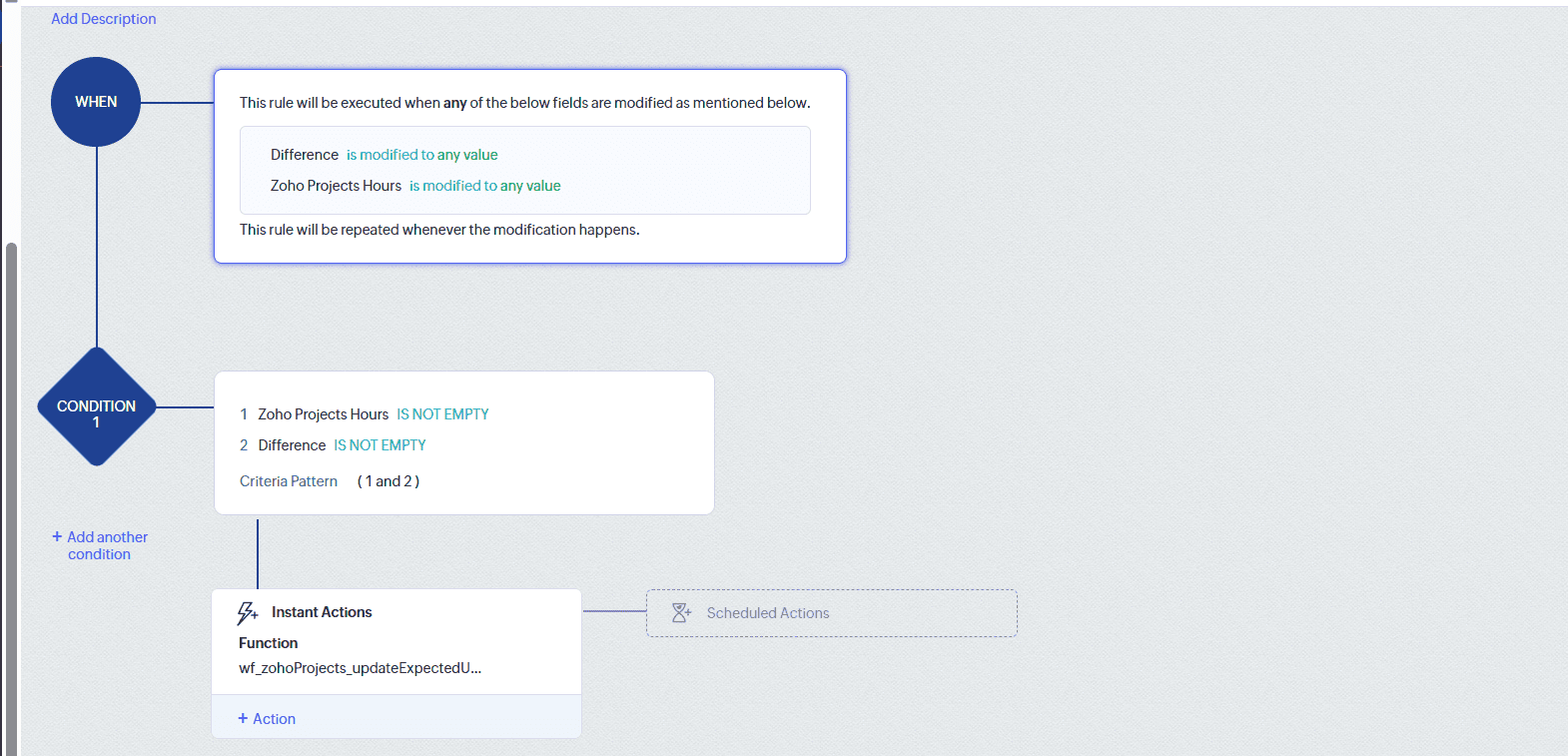
Workflow Rules
This is thefoundation of automation. You define a condition—the system takes action.
Example: As soon as a deal moves to the "Proposal Sent" stage, Zoho CRM :
creates a task for the manager to make a call in two days;
sends the client a confirmation email;
updates the "Expected Close Date" field.
No manual steps. No "I forgot."
Blueprint
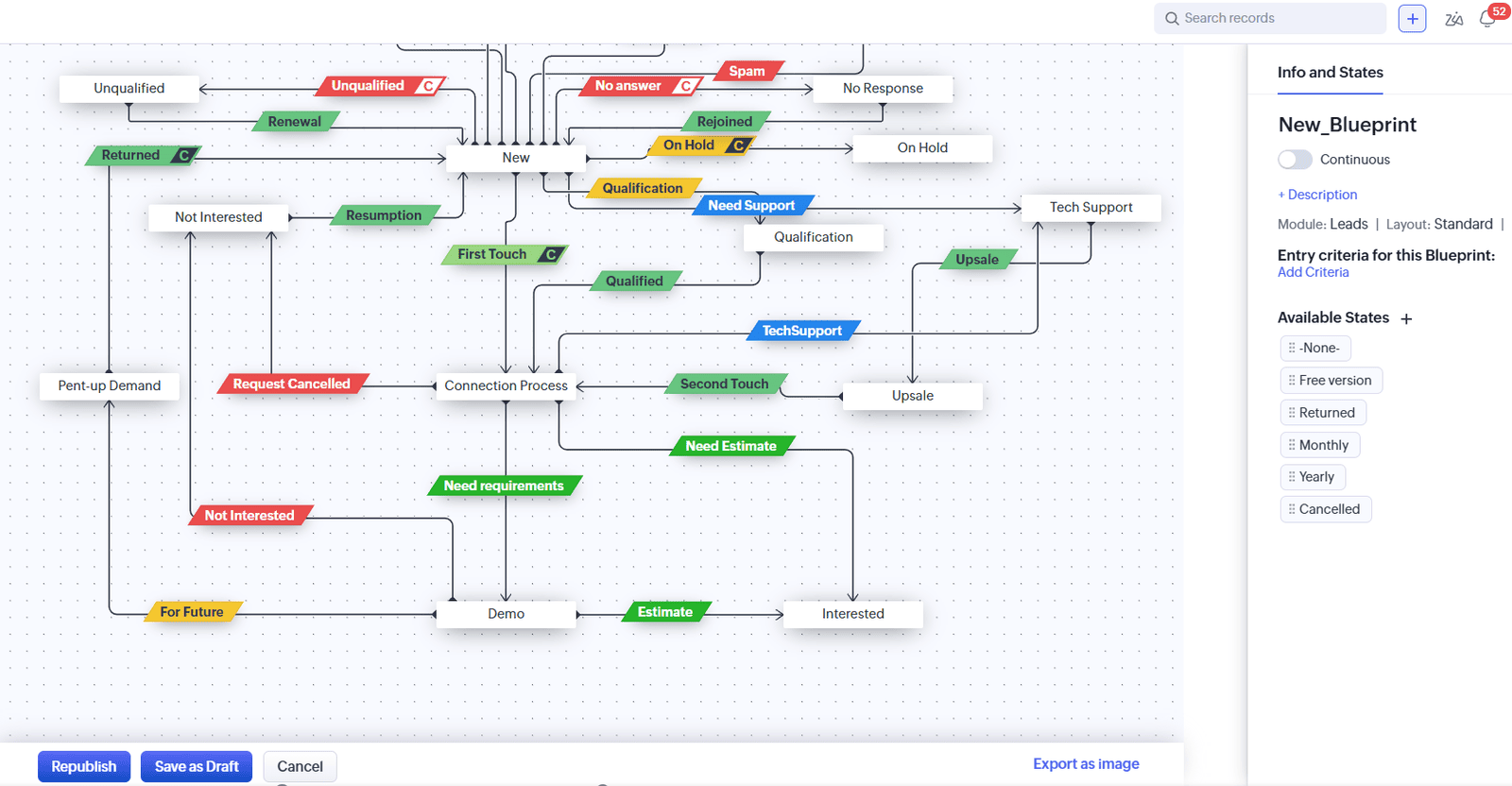
Blueprint is a more advanced tool. It allows you to map out a precise workflow for each stage of the pipeline: what the manager must do before a deal moves forward, which fields are required, and who needs to approve the next step.
This is particularly valuable for B2B with long sales cycles—no lead can "fall through the cracks" because the system simply won't allow the next stage to proceed until the required actions have been completed.
Macros
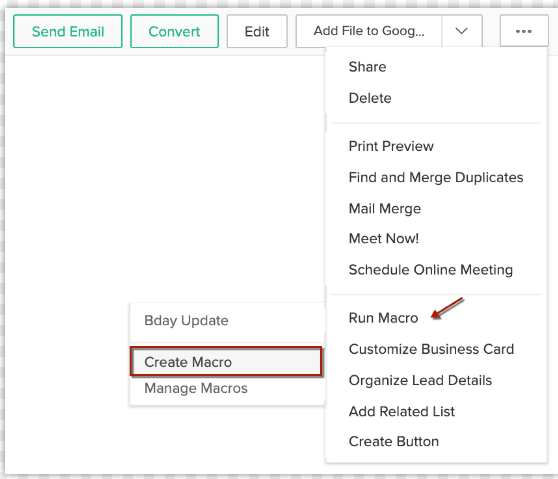
One click— multiple actions at once. The manager clicks "Send Proposal," and ZohoCRM automatically sends a templated email, updates the deal status, creates a follow-up task, and logs the activity. Five manual steps replaced by one.
Scoring Rules
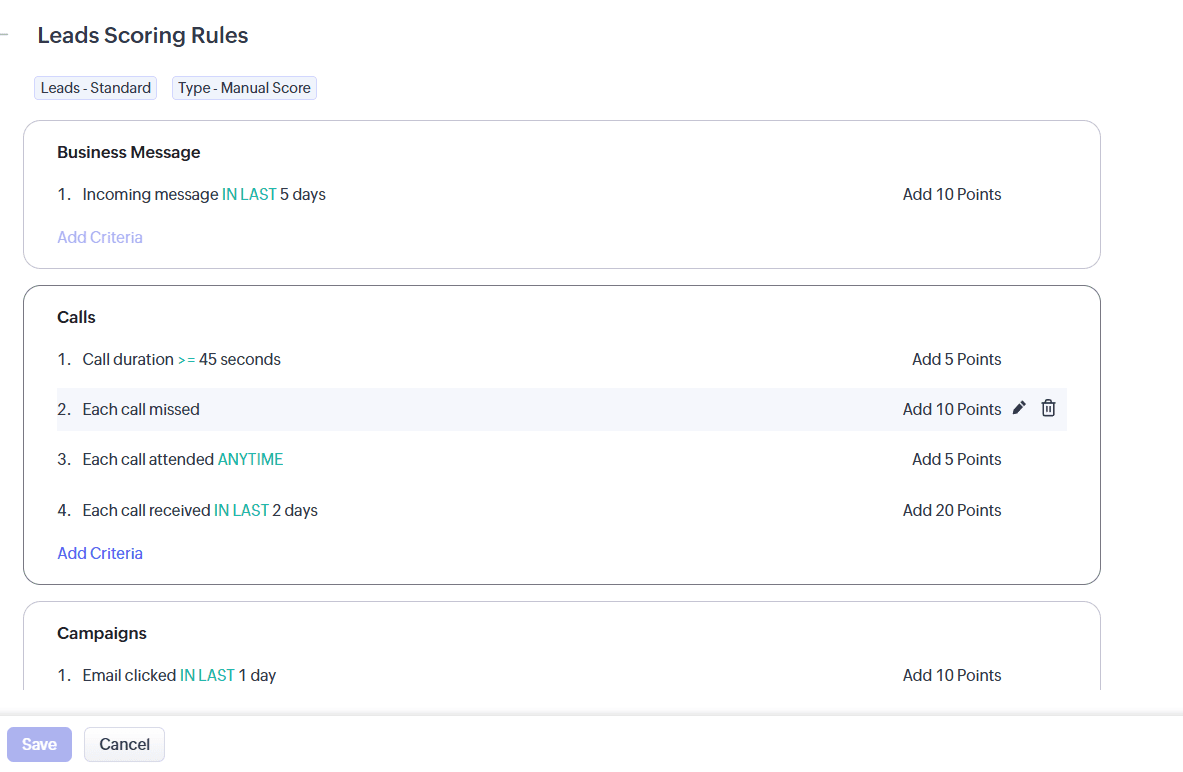
Zoho CRM scores every lead based on criteria you define: opened an email— plus points; visited your website— plus ; answered a call— plus . Managers can see who is a "hot" lead right now and focus their efforts there—instead of wasting time on cold leads.
Practical Use Cases for Marketers and Sales Managers
Get the PDF for free!
Automated Follow-Up After a Lead Magnet
A prospect downloads your checklist or registers for a webinar. Zoho CRM :
- creates a contact and a deal in the appropriate pipeline;
- launches a warm-up email sequence;
- After 3 days, it creates a task for the manager to call—but only if the lead has opened at least 2 emails.
Resolving Stalled Deals
Has a deal been inactive for 7 days? Zoho CRM sends the manager a reminder and notifies the team lead. No deal gets left behind or disappears from the pipeline
Automation Following a Closed Deal
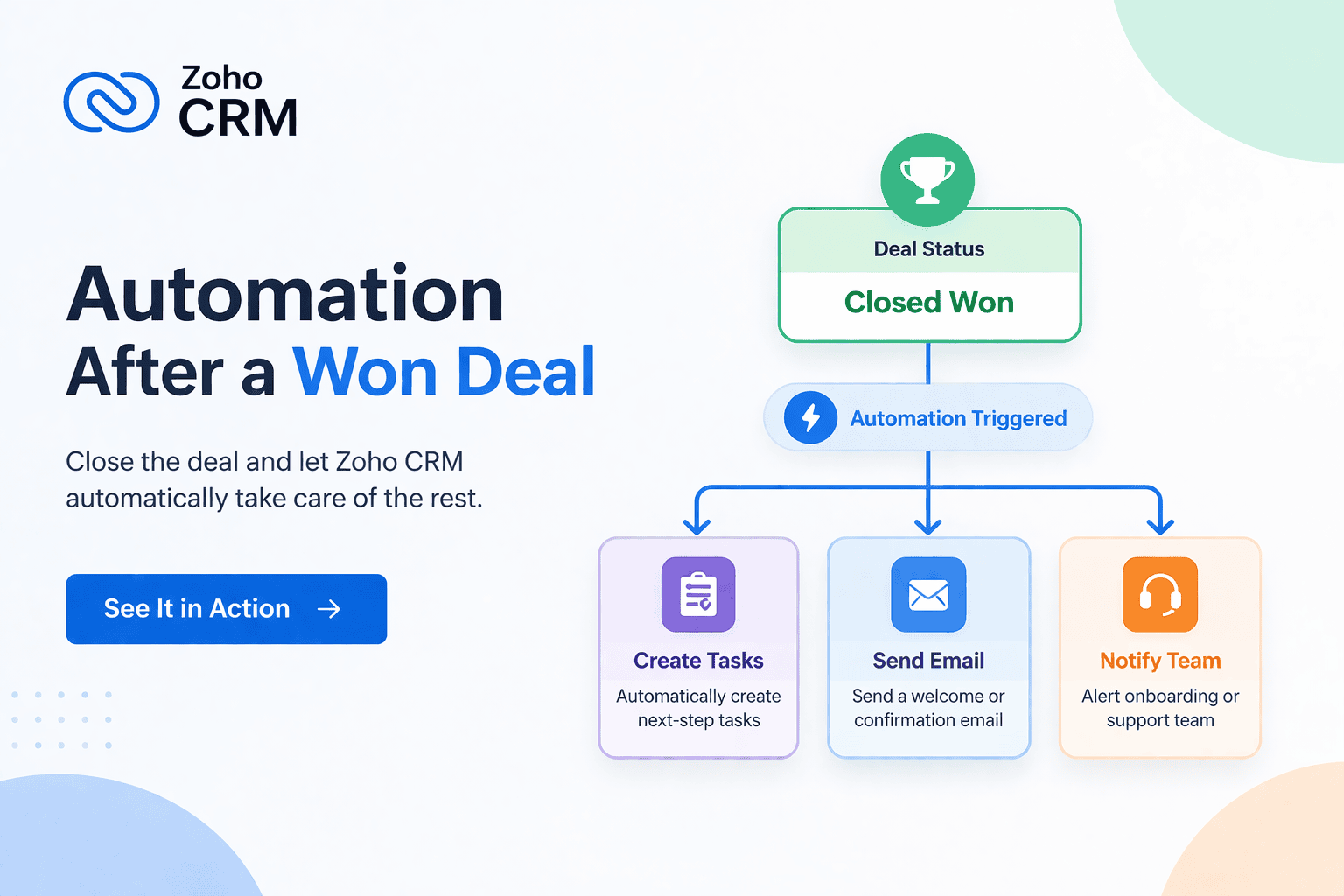
The deal is closed—great. But then comes onboarding, invoicing, and handing the client over to the service team. Zoho CRM sets the entire process in motion: it creates tasks for the relevant departments, sends the client a welcome email, and schedules the next follow-up.
Real-Time Pipeline Reporting
A marketer wants to know how many leads from a specific campaign have reached the "Negotiation" stage. A sales manager wants to see their pipeline for the coming week. Zoho CRM these reports automatically—no manual spreadsheet work required.
These scenarios are not limited to a single industry. Whether you're in SaaS, real estate, or a service-based business, or an electronics manufacturing company, automation can be tailored to your sales pipeline. For example, in real estate, automated lead tracking andups agents respond more quickly and close deals more efficiently
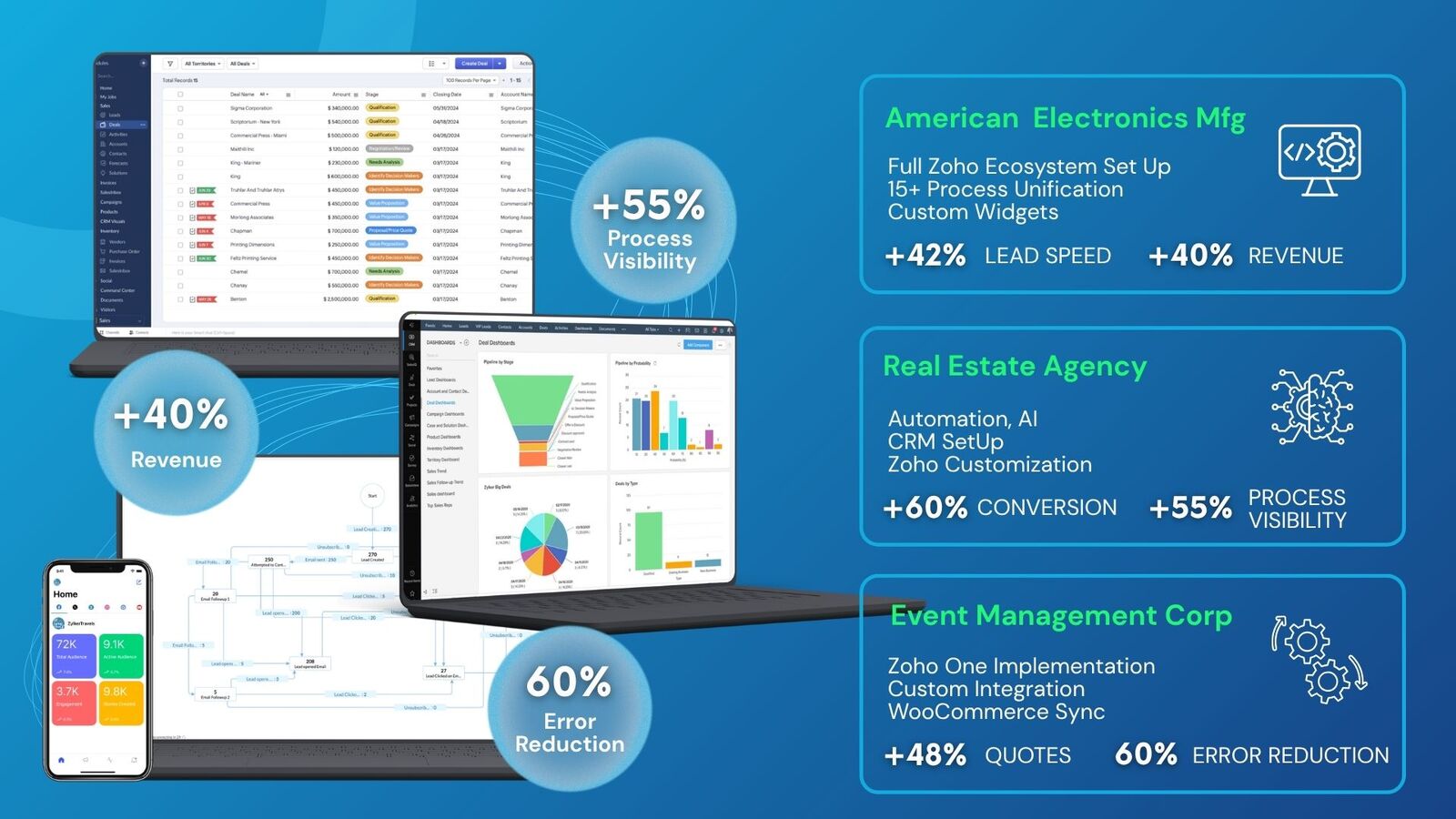
What CRM Automation Actually Delivers: Three Things:
Speed. Deals move through the pipeline without delays caused by human error.ups on time — not "when someone gets around to it."
Visibility. Leadership can see the status of every deal in real time. Problems become apparent before they result in lost revenue.
Focus. Managers spend their time talking to clients—not updating fields in a CRM. The system takes care of the routine tasks for them.