Zoho CRM Salesforce: Platform Overview
When comparingZoho CRM Salesforce, businesses are often looking for the best CRM to support sales growth, marketing automation, customer engagement, and long-term scalability. While both solutions are industry leaders, they cater to different types of organizations and business objectives.
Zoho CRM
Zoho CRM a powerful and affordable CRM that helps businesses automate sales processes, improve lead management, and boost team productivity. As part of the broader Zoho ecosystem, it integrates seamlessly with tools for marketing, customer support, accounting, analytics, project management, and HR.
Many companies looking for aSalesforce choose Zoho CRM it offers advanced automation, AI insights, and customization capabilities at a significantly lower cost. This makes it one of thebest CRM for small businesses, growing companies, manufacturers, professional service firms, real estate agencies, and technology startups.
Salesforce
Salesforce one of the most well-known names in the CRM and is widely used by large enterprises around the world. The platform offers extensive customization, advanced reporting, powerful automation capabilities, and a vast partner ecosystem.
Organizations with highly complex sales operations often consider Salesforce of its enterprise-level scalability and industry-specific solutions. However, when businesses compareZoho CRM Salesforce , implementation requirements, and total cost of ownership, they frequently find that Salesforce a greater investment in administration, training, and ongoing support.
Thinking about switching from Salesforce Zoho CRM? Read our guide on Salesforce Zoho CRM to learn about the migration process, common challenges, and the potential savings businesses can achieve after moving to Zoho CRM.
Zoho CRM Salesforce: Which CRM ROI Faster ROI 2026?
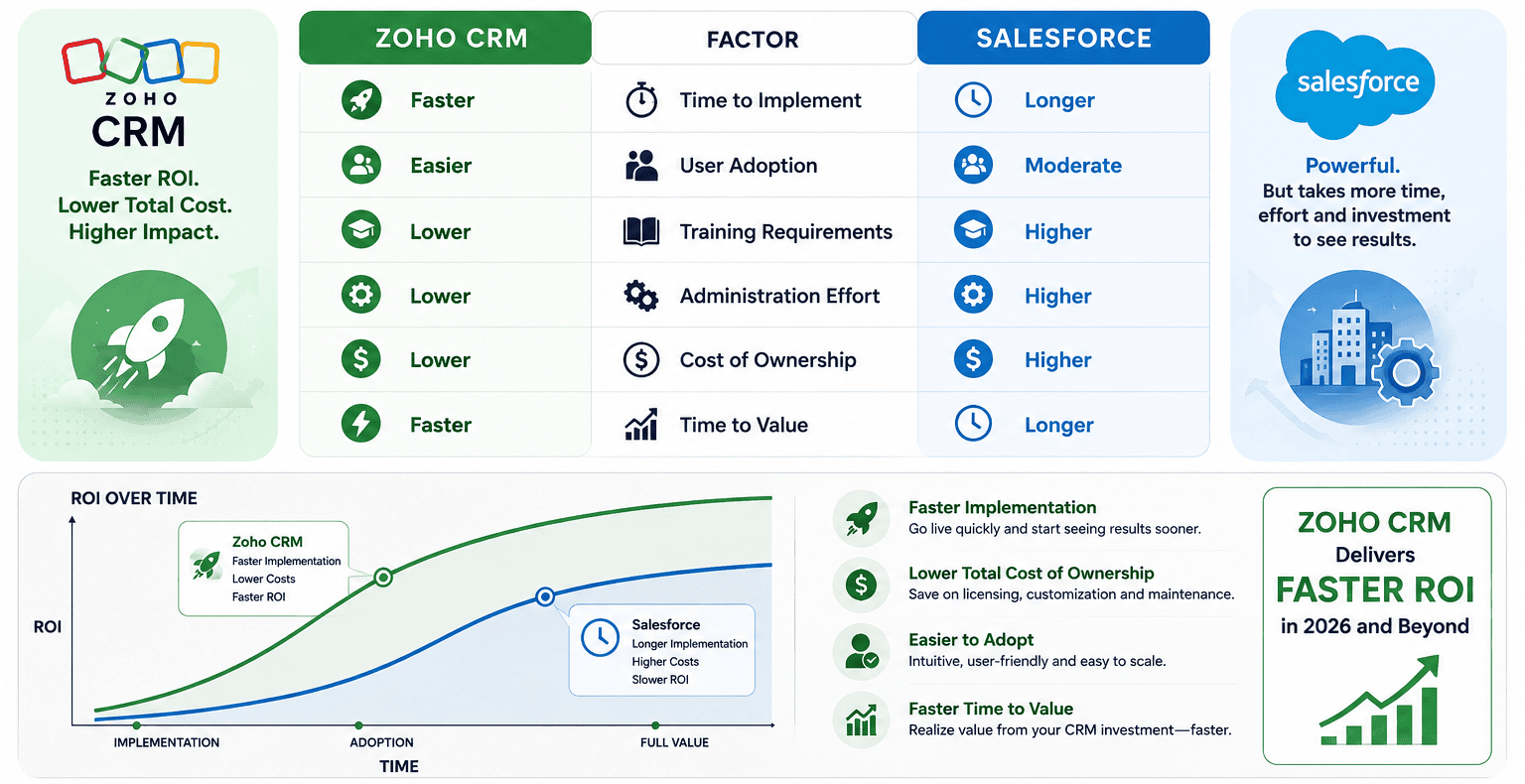
Choosing the right CRM 2026 is about driving revenue, not just managing contacts.Sales and marketing teams need a platform that helps generate more leads, automate processes, improve conversions, and provide actionable insights.
Salesforce andZoho CRMare two leading CRM , but they differ significantly in cost, complexity, flexibility, and time to value.
This comparison examines the key factors that matter most to growing businesses: automation, AI, usability, scalability, and ROI.
See How Much You Can Save with Zoho CRM
Zoho CRM Salesforce Businesses of Different Sizes
One of the most common mistakes companies make when comparing CRM is looking for a single "best CRM ."
In reality, the right solution depends on your company’s size, stage of growth, business processes, and long-term goals. When comparingZoho CRM Salesforce, organizations should focus on scalability, ease of adoption, implementation costs, and total return on investment.
Best CRM Small Businesses
Small businesses typically look for:
Affordable CRM
Quick implementation
Easy-to-use
Minimal administrative effort
Quick user adoption
For these organizations,Zoho CRMis often the preferred choice.
As one of the leading CRM for small businesses, Zoho CRM teams to manage leads, contacts, sales pipelines, and customer interactions in a matter of days rather than months. Most features can be configured without the need for developers, making it a cost-effectiveSalesforce for growing companies.
With lower implementation costs and a shorter learning curve, Zoho CRM businesses start generating value faster while keeping technology costs under control.
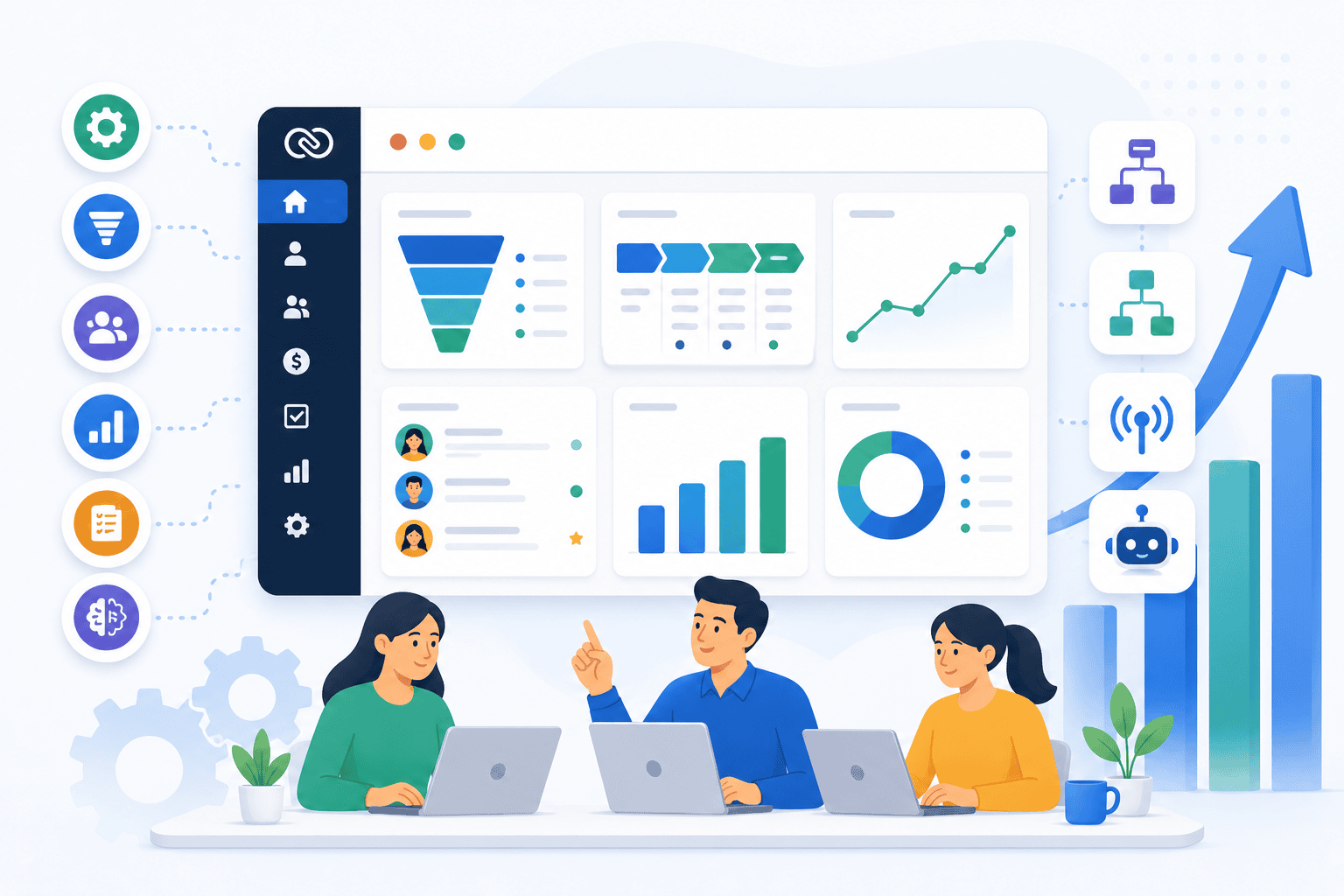
The Best CRM Growing Businesses and SMBs
As organizations grow, their CRM become more complex.
Growing companies often need:
Sales Process Automation
Multi-stage sales pipelines
Team collaboration tools
Advanced reporting and dashboards
Workflow Standardization
AI sales insights
This is whereZoho CRMcontinues to stand out.
Features such asBlueprint,Workflow Automation, SalesSignals, and Zia AI enable businesses to scale their operations without significantly increasing administrative complexity. Companies can automate repetitive tasks, improve lead management, and establish consistent sales processes across teams.
For organizations seeking a scalable CRM that strikes a strong balance between functionality and affordability, Zoho CRM one of the best CRM for small and medium-sized businesses in 2026.
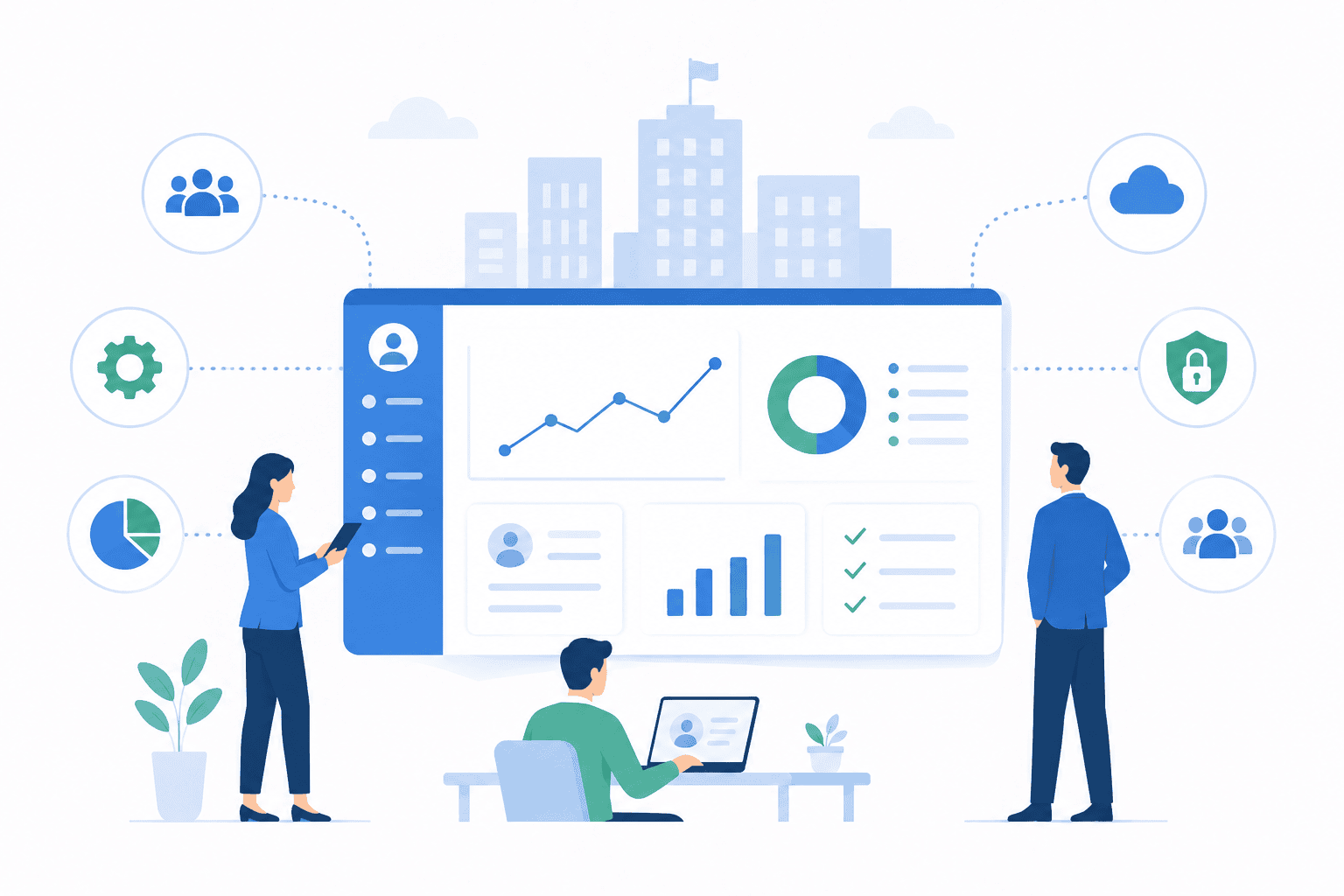
CRM Enterprise Organizations
Large enterprises often require:
Complex organizational structures
Multiple business units
Global sales teams
Regulatory compliance controls
Advanced security frameworks
Highly customized business processes
In these environments,Salesforce CRM significant advantages.
With its extensive customization capabilities, enterprise-grade ecosystem, and vast marketplace of integrations, Salesforce is Salesforce powerful platform for organizations that have dedicated CRM , internal development teams, and larger technology budgets.
When comparingZoho CRM Salesforce, the decision is rarely about which platform has more features. The real question is which CRM best CRM with your business needs, resources, and growth strategy.
Zoho CRMis often the best CRM small businesses and growing companies looking for affordability, quick implementation, built-in AI, and powerful automation.
Salesforce is typically better suited for large enterprises that require extensive customization, complex integrations, and enterprise-scale governance.
Not familiar with Zoho CRM ? We recommend starting with our comprehensive guide, Zoho CRM Review: The Best CRM for Sales Growth & Automation, which covers Zoho CRM , automation, AI , pricing, and why it remains one of the best CRM for small and growing businesses in 2026.
AI in 2026: Zia Salesforce
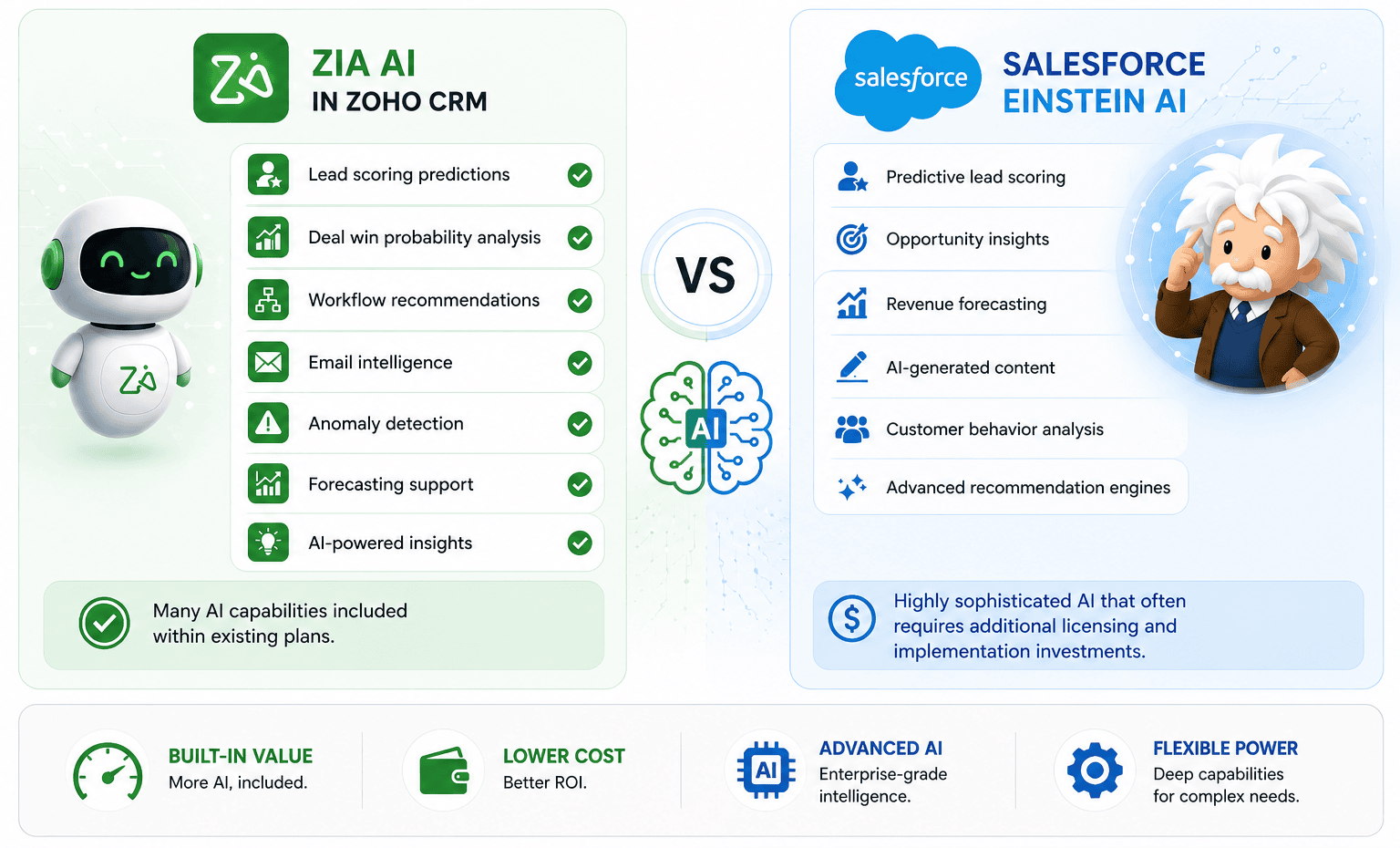
When comparing Zoho CRM Salesforce, artificial intelligence is often a key deciding factor. Salesforce offers enterprise-grade AI designed for large organizations that require advanced analytics, predictive forecasting, and highly customized CRM .
However, for businesses looking for a Salesforce with a lower total cost of ownership, Zoho CRM exceptional value. Zia AIprovides intelligent lead scoring, sales predictions, workflow automation, and actionable insights without the high licensing and implementation costs often associated with Salesforce. For many SMBs, Zoho CRM the ideal balance between AI , affordability, and ease of deployment.
User Experience and Adoption Rates
CRM depends on user adoption. Aplatform with hundreds of features offers little value if employees don’t use it.
Zoho CRM Experience
Zoho CRM designed with simplicity in mind.
Users typically benefit from:
Simpler navigation
Faster onboarding
Reduced training requirements
Simpler day-to-day administration
This often leads to faster adoption among sales teams.
Salesforce Experience
Salesforce a wide range of features but can seem overwhelming to new users.
Organizations often invest in:
Formal training programs
Dedicated administrators
User enablement initiatives
The platform is highly effective once implemented, but it often takes some time to get the hang of it.
Total Cost of Ownership Beyond Licensing
Many CRM focus solely on subscription pricing. However, software licenses are only one part of the total investment.
Organizations should also consider:
Implementation services
CRM
User training
Ongoing administration
Consulting services
System maintenance
Future improvements
While Salesforce offers exceptional enterprise-level capabilities, the total cost of ownership can rise significantly as organizations grow. Zoho CRM provides a more predictable and affordable pricing model, making it an attractive option for businesses focused on maximizing ROI.
Need Help with CRM ?
Both Zoho CRM Salesforce powerful CRM , but they cater to different business needs. Salesforce often the preferred choice for large enterprises with complex requirements, while Zoho CRM an excellent balance of functionality, automation, AI , and affordability. For most small and growing businesses, Zoho CRM faster implementation, easier adoption, and greater overall value in 2026.
The real value comes from effective implementation, automation, integrations, and user adoption.
At CRMOZ, we provideZoho CRM servicesthat help businesses streamline sales processes, automate operations, and improve reporting.